Hospital beds
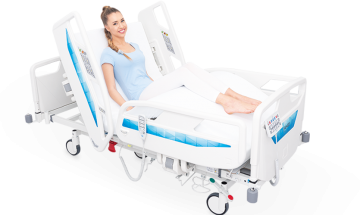
Famed NOBILIS


The three-column structure ensures stability and safety, while the full-length side rails protect the patient from falling out of the bed even at extreme lateral tilt angles and when using a mattress up to 230 mm thick. Control panels in the side rails allow the patient to easily adjust the bed position or call for assistance. The consistent distance between the side rails eliminates the risk of entrapment of fingers and hands. Sensors prevent lateral tilts when the side rails are lowered, protecting the patient from falling out of the bed. pSilver™ technology in all plastic and varnished components of the bed guarantees bacteriostatic protection and assists in the fight against hospital infections. The unlocked wheel alarm and low battery warning alert medical staff to potential risks.
Lateral tilts enable the use of positioning therapy aimed at regulating muscle tension, stimulating the nervous system, preventing pressure ulcers, and improving pulmonary ventilation and organ perfusion. The system of very early patient mobilization supports recovery, and the dedicated VEM control panel in the side rails facilitates getting out of bed. The backrest angle indicator in the mattress platform frame and the 30-degree position indicated on the central panel allow the staff to position the patient in a way that facilitates gas exchange. The intuitive control system provides access to therapeutic positions with the press of a single button on the central control panel. Lockable bed ends in the frame provide appropriate stability and enable safe patient mobilization. The double autoregression function reduces excessive pressure on the lumbar region and calves in the sitting position and helps prevent pressure ulcers.
The three-column structure guarantees a high maximum load capacity of 250 kg. A special cut-out in the head end facilitates intubation and performing other procedures involving the patient’s head or chest. The integrated, certified weighing system with an accuracy of 100 grams allows for monitoring fluctuations in the patient’s weight. The variety of available controls facilitates patient positioning, and the optional foot control allows simultaneous bed position adjustment and patient care. The built-in battery ensures the bed can be operated during transport or in case of a power outage. The dedicated X-ray cassette tray with a scale facilitates proper cassette positioning relative to the patient’s body, while the HPL mattress platform ensures X-ray transparency. Famed Nobilis is compatible with patient lifts and other equipment requiring placement under the bed base.


Side rails made of ABS material provide the patient with comfort and safety. The release mechanism enables smooth and controlled lowering with one-hand operation. A constant distance between the rails, along with compliance with the medical standard EN 60601-2-52, prevents accidental finger and hand entrapment.

High visibility CPR levers, accessible from both sides of the bed even when the side rails are lowered, return the mattress platform to a flat position to enable resuscitation. The removable ABS headboard can be used as additional CPR support under the patient.

A special cut-out in the head end provides quick access for medical staff during intubation and other procedures involving the patient’s head and chest. The ability to quickly lower the side rails and to fully or partially remove the head end accelerates the execution of emergency procedures performed by medical staff.

The structure supported by three cylindrical columns guarantees stability and enables the safe implementation of therapeutic positioning protocols. Double large castors with a central locking system provide protection against uncontrolled bed movement. An optional unlocked castor alarm is activated when the bed is connected to the power supply and remains active unti the locking lever is engaged.

Patient safety is ensured by a range of protection systems that alert medical staff to potential hazards as well as to extreme or therapeutic positioning values of individual bed sections.

For years, we have been creating medical equipment that combines innovation, ergonomics, and the highest safety standards. We understand that in the hospital environment, every detail matters, which is why we focus on solutions from the design stage that not only meet strict standards but also facilitate daily work and enhance the comfort of care. We know that in medical treatment, what matters is not only advanced technologies but also a commitment to the safety of both patients and medical staff.
When the maximum permissible load is exceeded, a warning message will appear on the weighing system display. The system detects bed overload and helps prevent situations that could compromise patient safety.

The system notifies medical staff of unlocked castors when the bed is connected to the power supply. An audible signal warns the staff and helps prevent uncontrolled bed movement, which could pose a risk to patients.

The system blocks the use of lateral tilt functions if any of the side rails are lowered, protecting the patient from falls and injuries, and protecting the hospital from liability for potential damages.

The side rails protect the patient from falling along the entire length of the mattress platform, and their height allows safe use with a mattress up to 230 mm thick. Anatomical hand grips integrated into the side rails support safe repositioning and getting up from the bed.

According to studies, in the United States alone, there are up to 1 million patient fall incidents in hospitals each year, resulting in approximately 250,000 injuries and up to 11,000 deaths. [1].
[1] Fall Currie L. and Prevention Injury. In: Hughes RG, ed. Patient safety and quality: an evidence-based handbook for nurses (Prepared with support from the Robert Wood Johnson Foundation) AHRQ Publication NO.08-0043. Rockville, MD: Agency for Healthcare Research and Quality; 2008.
A wide range of control options and the ability to customize their functions to the needs of medical staff allow full focus on patient care. The optional foot control enables simultaneous bed positioning adjustments and the performance of other caregiving activities, enhancing staff comfort, improving care efficiency, and supporting patient recovery.

The patient weighing system with 100 g accuracy enables precise body weight monitoring, which is crucial for assessing the patient’s condition, the effectiveness of clinical nutrition, and for adjusting fluid supply and medication dosing. The integrated system eliminates the need to transfer the patient to a separate scale, enhancing care comfort and reducing the workload of medical staff.

The bed is equipped with programmed Fowler and anti Trendelenburg positions, as well as a function that signals when the backrest angle reaches 30°, 45°, or another value set by the staff — with the option to automatically stop movement at the selected angle. This facilitates mechanical ventilation, improves gas exchange, and reduces the risk of VAP (ventilator-associated pneumonia) and aspiration of gastric contents, which is critical for patients with feeding tubes or swallowing disorders.

Lateral tilts enable medical staff to perform therapeutic positioning, supporting faster patient recovery. Regular repositioning reduces pressure on specific areas of the body, improves skin condition, facilitates lung ventilation, stimulates blood circulation, and helps reduce swelling and pain caused by prolonged immobility. Precise adjustment of the lateral tilt angles is achieved through the central control panel, which displays the tilt value with an accuracy of 0.1 degree.

Lateral and longitudinal tilts, along with programmed positions accessible with the press of a button, promote frequent patient repositioning, supporting the prevention and treatment of pressure ulcers. Lateral tilts facilitate patient care and increase staff comfort. The use of the Famed CareSafe™ dynamic pressure mattress ensures effective care for patients at very high risk of pressure ulcers and treatment of pressure ulcers up to stage IV (EPUAP).

Patient care in the intensive care unit requires actions that simultaneously support treatment and minimize the risk of complications resulting from immobility — such as pressure ulcers, muscle weakness, or thrombosis. Key factors include regular repositioning, early mobilization, proper body positioning, and the use of an anti-bedsore mattress. Famed Nobilis integrates all these functions, providing real support for medical staff in their daily work.
Lateral tilts facilitate patient care without the need to lift the patient, reducing strain on the lower back, shoulder and arm muscles, as well as the risk of spinal injuries and the associated treatment costs and work absences.

The use of lateral tilts in therapeutic positioning reduces the physical effort required by medical staff to properly position the patient on the bed, prevent pressure ulcers, provide care, and change bedding.

Easy adjustment of frequently used bed positions with the press of a single button saves time — cardiology chair position, Fowler’s position, Trendelenburg position, examination position, auto-contour, and emergency position.

EasyDrop™ side rails with a release system allow smooth and controlled lowering of the side rails by medical staff using one hand. When lowered, the side rails fit as close as possible to the mattress platform, saving space at the sides of the bed.

The column-based structure, the HPL mattress platform covering over 90% of the surface, the ABS base cover, and the pSilver™ technology- enhanced varnished and plastic components of the bed support disinfection and help prevent the spread of microorganisms.

The structure, supported by three stable columns, allows for lateral tilts of up to 25 degrees in each direction. The appropriately adjusted movement speed, fall prevention system, and the wide range of available controls make this solution an essential support in reducing the challenges faced by medical staff in their daily work.
In the first phase, the medical staff, based on the patient’s condition, may decide to raise the backrest to a 30° position or higher to prevent ventilator- -associated pneumonia (VAP). When adjusting the backrest position (up/ down), it will automatically set to 30 degrees and either stop or signal to the medical staff when to halt, emitting an audible signal (1).

In the second phase, the medical staff may decide to position the bed in the cardiology chair position and begin the muscle recovery program with the patient (2). The anti-Trendelenburg position, combined with the lockable bed ends, allows the patient to test their ability to stand. With the built-in calf section assisted by a gas spring, we can effortlessly raise the patient’s legs to a position that facilitates putting on socks and compression cuffs, or begin lower limb mobilization exercises.

In the third phase, with staff assistance, the patient may attempt to stand. If the patient is strong enough to try standing, they can use the dedicated control panel located on the outside of the side rail. The anatomical hand support in the side rail is equipped with up/down buttons, allowing the patient to be raised to a level at which they can stand independently. If the patient is too weak, staff assistance will be required.

Early patient mobilization is a crucial element of every modern hospital. Famed Nobilis facilitates the patient’s ability to get out of bed and perform exercises through the use of dedicated VEM panels, lockable, stable bed ends, and side rails with multiple secure grip points. Famed Nobilis can assist the patient in standing up and moving away from the bed, encouraging their return to functional recovery and health. For the hospital, this means quicker patient discharge, with the patient nearing full recovery.
Discover detailed information about Famed NOBILIS available alongside and unlock the full potential of this advanced intensive care bed.